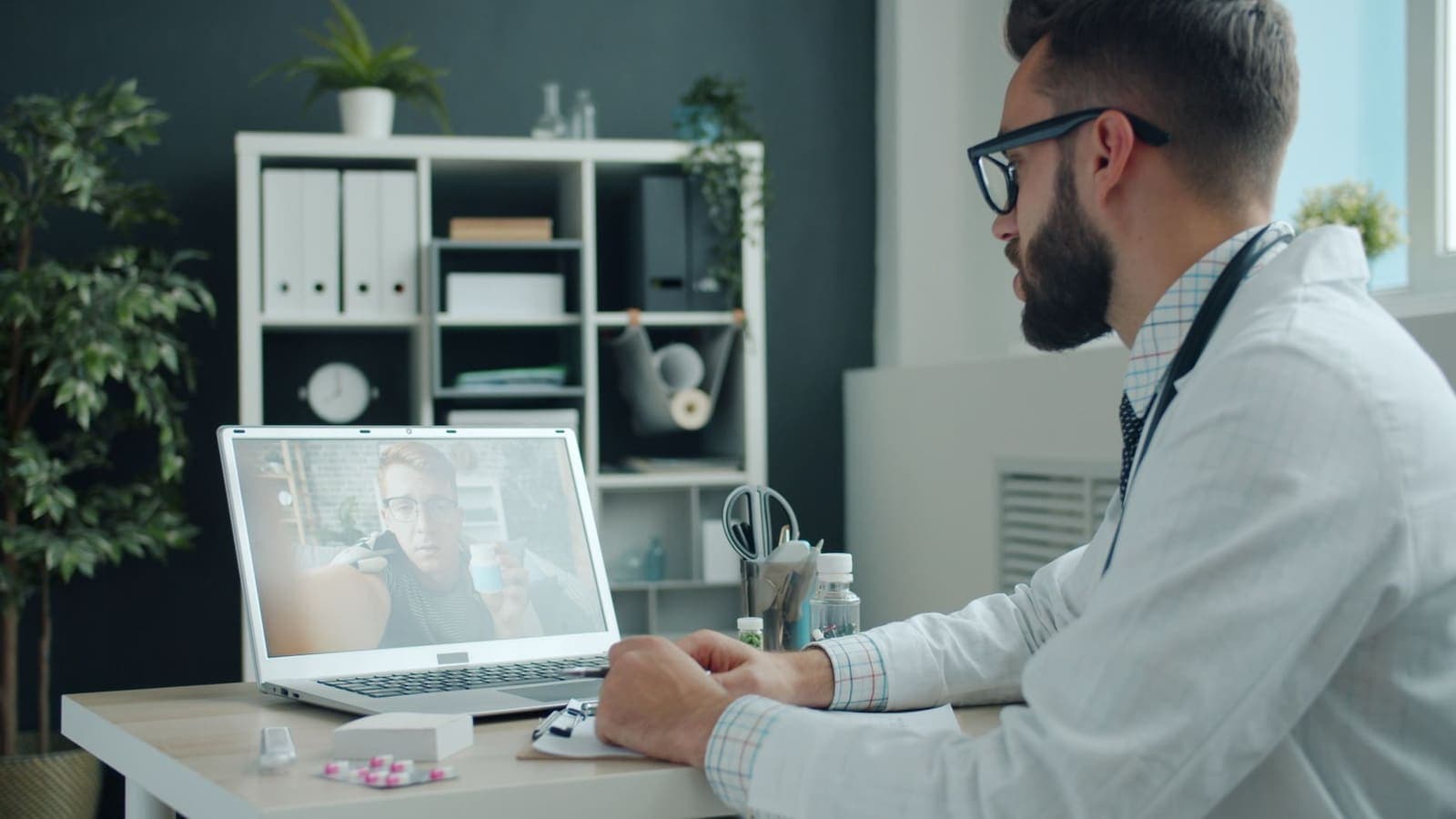
DEA telehealth prescribing rules change on January 1, 2027 unless Washington acts first. The temporary flexibilities that let a clinician prescribe Schedule II to V controlled substances after an audio-video visit, without ever seeing the patient in person, end at midnight on December 31, 2026. DEA's permanent replacement, a special registration for telemedicine, went to White House review on August 25, 2026 and its text was still not public in early October. A Michigan practice that prescribes stimulants, benzodiazepines, testosterone or sleep medication to patients it has only met on video has eleven weeks to prepare for both outcomes: a new rule with new registration steps, or a return to the in-person requirement.
In short
- The fourth extension runs until the end of the day on December 31, 2026 (DEA and HHS, 2025).
- Of about 44.6 million controlled substance prescriptions across 258 organizations in 2024, roughly 16% were issued without a prior in-person evaluation (DEA and HHS, 2025, citing stakeholder data).
- The final special registration rule went to White House review on August 25, 2026 (McDermott Will & Schulte, 2026).
- Medicare's separate telehealth payment flexibilities run through December 31, 2027 (Medical Economics, 2026).
What changes for DEA telehealth prescribing rules on January 1, 2027
The Controlled Substances Act, as amended by the Ryan Haight Act, sets the default. DEA's December 31, 2025 notice describes it: outside certain exceptions, a practitioner may prescribe a controlled substance by telemedicine only after "at least one in-person medical evaluation" of the patient. The pandemic flexibilities suspended that requirement, and DEA has extended them four times to avoid what it calls the "telemedicine cliff," the abrupt return of the old restrictions before a permanent rule exists.
The fourth extension "is in effect until the end of the day December 31, 2026." It allows Schedule II to V prescribing after audio-video telemedicine visits, and audio-only for certain opioid use disorder medications. Buprenorphine for opioid use disorder already has its own permanent telemedicine path: a separate final rule, effective February 18, 2025, lets a practitioner prescribe "an initial six-month supply of buprenorphine" after a telemedicine encounter. It is the exception, not the model.
Two deadlines that get confused
Practices hear "telehealth extended through 2027" and assume they are covered. They are not. The 2026 spending law, signed in February, "extends key Medicare telehealth flexibilities through Dec. 31, 2027," Medical Economics reported. That decides what Medicare pays for a telehealth visit. It says nothing about whether you may prescribe a controlled substance at that visit. DEA decides that, and DEA's date is December 31, 2026. A practice can be paid for the video visit and still be unable to send the prescription.
What the pending rule proposed
The final text is not public. WCH wrote on October 8, 2026 that "the rule remained under review as of early October, and its final text was not publicly available." What we know is what DEA proposed in January 2025, which the final rule may change:
| Proposed registration | Who it was for | Schedules |
|---|---|---|
| Telemedicine Prescribing Registration | Qualified clinician practitioners | III to V |
| Advanced Telemedicine Prescribing Registration | Specialists such as psychiatrists and hospice physicians | II to V |
| Telemedicine Platform Registration | Covered online telemedicine platforms | II to V, dispensing |
The proposal set a registration fee of $888, with a $50 state telemedicine registration for each state in which a clinician practitioner sought one. It also proposed a nationwide prescription monitoring check, though "the nationwide PDMP check requirement, however, would have a delayed effective date of three years." Treat all of this as what was proposed, not what will apply. Watch the Federal Register.
What Michigan already requires either way
Michigan's own rules apply in person and on video alike. MCL 333.7303a says a licensed prescriber "shall not prescribe a controlled substance listed in schedules 2 to 5 unless the prescriber is in a bona fide prescriber-patient relationship with the patient." The prescriber "shall provide follow-up care to the patient to monitor the efficacy of the use of the controlled substance." And before prescribing more than a 3-day supply, the prescriber must obtain and review the patient's report from the state monitoring system, MAPS. None of that changes on January 1. A practice already doing it well is most of the way ready for whatever DEA publishes.

An eleven-week plan for a Michigan practice
- Run the list now. Every active patient with a controlled substance prescription who has never had an in-person evaluation with your practice. Your EHR can filter by medication and visit type. That list is your exposure.
- Sort it by refill date. The patients whose next refill falls in January and February are the first ones a lapse would hit.
- Hold in-person slots for December and January. If no rule lands, those patients need a visit before their next prescription. Put the capacity on the schedule now rather than finding it in the last week of December.
- Write the patient message once. Plain words: the federal rule may change on January 1, here is what it means for you, here is how to book. Have it approved before you need it.
- Check MAPS and follow-up documentation. The Michigan requirements in MCL 333.7303a apply regardless. An audit of the list from step 1 now is cheaper than one later.
- Assign one person to watch the Federal Register. When the final rule publishes, its effective date and registration steps decide the rest of this plan.
The mistake most practices make at step 3
They wait for the rule. If it publishes in late December, there will be no time to book visits for a remote-only panel, and if it does not publish, the in-person requirement returns on a holiday weekend. Booking in-person evaluations now costs little: a visit the rule later makes unnecessary can be converted back to video. A visit you did not book cannot be conjured on January 2.

Where we fit
Our healthcare work is the part of this that is scheduling: reminders by text that confirm the in-person visit, and a waitlist that refills a cancelled slot the same day, so a December push does not leave holes in the calendar. For the other telehealth date on the horizon, see our post on remote patient monitoring in 2027.
Run the list this week. Then you will know how big January is.