UAD 3.6 is the new appraisal report format Fannie Mae and Freddie Mac require for new appraisals submitted on or after November 2, 2026, and for real estate agents it changes what the buyer, the seller and the underwriter will read, not who decides the value. The old form family becomes one report that grows or shrinks with the property, interior and exterior condition are rated separately, and the free-text addendum gives way to specific fields. Then, on September 30, the two companies gave approved lenders a way to keep sending the old format until May 19, 2027. So a Michigan deal closing this winter may get either report. Your part is the same in both: send the appraiser facts, with the square footage split above and below grade.
In short
- November 2, 2026: UAD 3.6 becomes mandatory for new Fannie Mae and Freddie Mac appraisal submissions (Freddie Mac, 2026).
- May 19, 2027: the last day approved lenders with the new exception can submit a new report in the old UAD 2.6 format (HousingWire, 2026).
- 76% and 42%: the share of houses in the East North Central states, Michigan's region, with a basement and with a finished one, against 43% and 25% nationally (EIA, 2026).
- 30%: how much of a borrower's qualifying income Fannie Mae now lets rental income from an ADU supply, on UAD 3.6 appraisals only (Clear Capital, 2026).
What changes on November 2, 2026
Freddie Mac's FAQ lists what retires: the 1004 Uniform Residential Appraisal Report and its desktop and hybrid versions, the 1073 condo report, the 2055 exterior-only report, the 1025 small income property report, the manufactured home report and the 1004D update and completion report. In their place is one Uniform Residential Appraisal Report with no form number. Sections appear only when they apply. The National Association of Realtors gives the example of an accessory dwelling unit section that shows up only when the property has one.
Three changes matter to an agent:
- A summary front page. NAR describes a standard first page carrying the value opinion, a photo of the subject, the property description and the appraisal type, whatever the property.
- Split ratings. The condition and quality scales are unchanged but redefined, and each is now given separately for the interior and the exterior (Freddie Mac).
- Fields instead of an addendum. New update status and condition status fields record individual components, and commentary sits next to the thing it describes rather than in pages at the back.
Florida Realtors put the effect plainly in May: the reports should be "easier to read and interpret." That cuts both ways. Buyers and sellers who never got past the second page of a 1004 will read this one.
Which format your deal gets this winter
The September 30 exception means the switch is not a single date. HousingWire laid out the timeline:
| Date | What happens |
|---|---|
| November 2, 2026 | UAD 3.6 mandatory for new submissions; the date did not move |
| Nov 2, 2026 to May 19, 2027 | Approved lenders holding the exception may still submit new UAD 2.6 reports |
| March 1 to May 2027 | Reduced functionality: UAD 2.6 reports get collateral risk scores of 999 and 99 and lose warranty relief on value |
| May 20, 2027 | UAD 3.6 mandatory for all new submissions |
| June 27, 2027 | Last day to resubmit a UAD 2.6 report already delivered |
Only lenders approved by Fannie Mae and Freddie Mac can request the exception, and they must ask each company separately. Brokers and correspondent lenders either deliver UAD 3.6 or sort it out with their investors. National Mortgage News reported in May that the November date applies to when the appraisal is submitted, not when the loan is sold. Government loans run on their own clock: NAR reported on September 22 that FHA has adopted UAD 3.6 without setting a date, and VA and USDA have announced nothing.
Why the square footage gap bites harder in Michigan
Under the ANSI Z765 measuring standard, which Fannie Mae has required since April 1, 2022, "a basement is any space that is partially or completely below grade," as the Wisconsin Realtors Association summarised it. Gross living area is finished space above ground. A walk-out lower level with a bar, a bedroom and daylight windows is still basement area. Opteon's July FAQ confirms that ANSI still governs reported square footage in UAD 3.6.
That rule lands harder here than in most of the country. In the 2024 Residential Energy Consumption Survey, released in March 2026, 10.89 million of the 14.23 million houses in the East North Central states (Michigan, Ohio, Indiana, Illinois and Wisconsin) had a basement, about 76%, and 6.00 million had a finished one, about 42%. Across the United States the figures are 43% and 25%. These counts cover houses only; the survey does not ask apartments or mobile homes about basements.
So in metro Detroit, a listing that advertises one square footage figure including the finished lower level will often meet an appraisal reporting a smaller gross living area. Nothing is missing. The finished basement is reported in its own line, as it was before. What is new is a front page more people will read.
Five things to send before the appraiser arrives
- Ask the lender which format it is ordering. NAR's September 22 advice is to have the borrower ask early. Under the exception, two buyers closing the same week can get different reports.
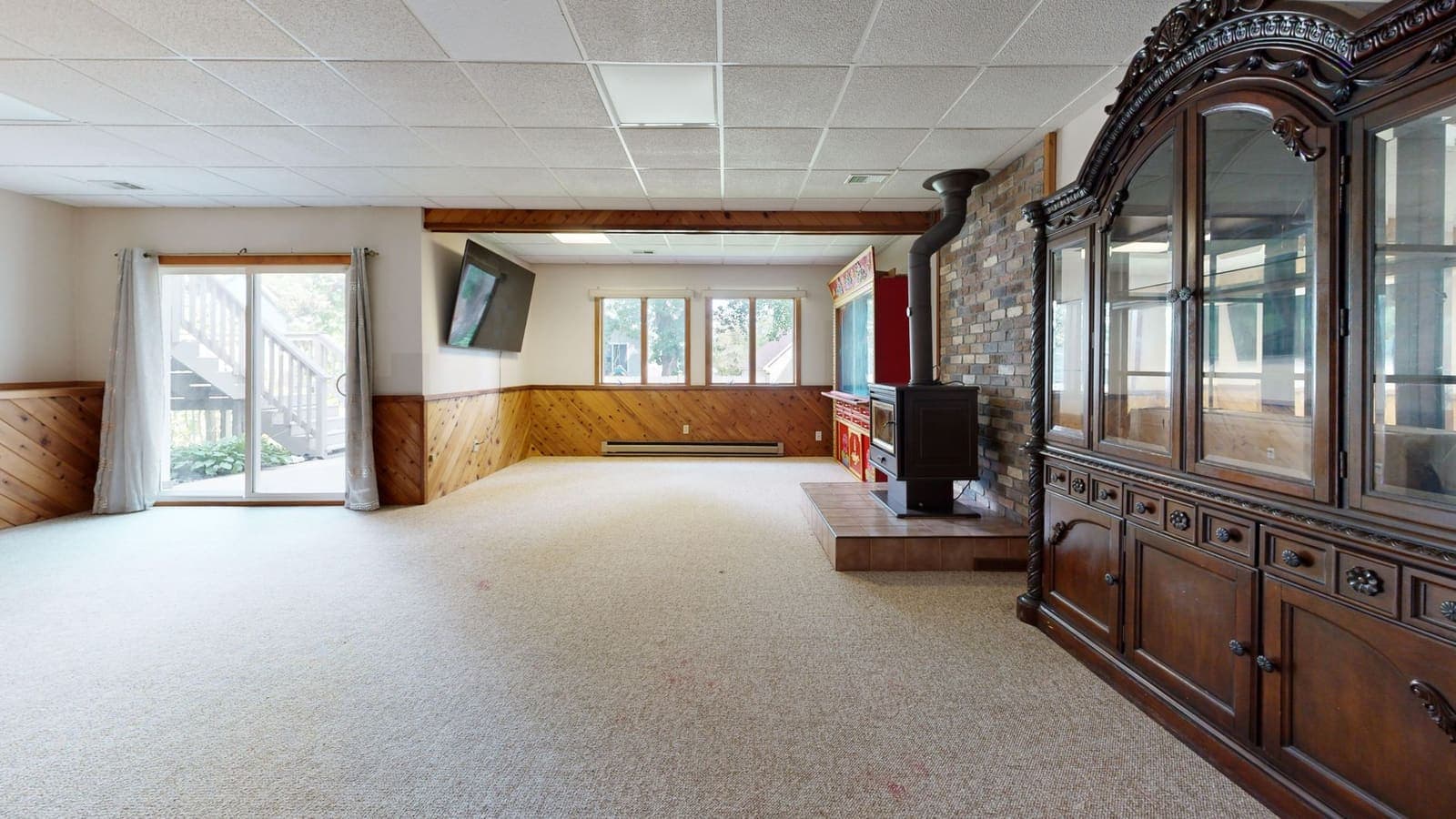
- Split the square footage. Above grade finished, below grade finished, below grade unfinished, and say where each number came from: the seller, the assessor's record, the builder. The Wisconsin Realtors Association has advised agents to cite the source of any square footage or bedroom count since 2022.
- List updates with dates, not adjectives. NAR tells agents to replace "beautifully updated" with what was done and when. The new component-level fields have somewhere to put "roof 2019, furnace 2022, kitchen 2021." Give the appraiser the year and, where you have it, the invoice.
- Flag the features that open extra sections. Opteon advises lenders to add guidance to engagement letters for waterfront and other site influences, energy-efficient features and disaster mitigation. On a lake property up north or a house with new windows and a heat pump, say so in the packet. If there is an ADU, say that too: Clear Capital reports that Fannie Mae's wider ADU rules, effective March 31, 2026, apply only on UAD 3.6 appraisals.
- Allow more time. NAR warns of longer property visits and a longer path through review and underwriting. Book the appraisal early and keep the contingency date realistic.
The mistake most agents make at step 2
They send the listing sheet. The MLS figure includes the finished lower level, the appraisal reports a smaller gross living area, and the seller reads the new front page and concludes the appraiser missed a room. The appraiser did not. The finished space is in the report as basement area, valued against comparable sales on the same basis. A packet that splits the figures before the visit heads off that call. If the buyer anchored on an online estimate built from public records, our post on how accurate a Zestimate is explains why that number was never a measurement. County-level prices in the Michigan real estate market report are a better reference when you set expectations.

What the agent does not do
NAR's guidance puts it in two sentences: "You provide the facts. The appraiser performs the analysis." Do not argue the value in the packet, and do not send a list of comps with commentary on why the house deserves more. Send closed sales with the facts the MLS does not show, such as concessions or a renovation the photos missed, and answer the appraiser's call about them promptly. More on how Michigan transactions run is on our real estate industry page.
The appraiser still decides the number. What you send decides how much they have to guess.